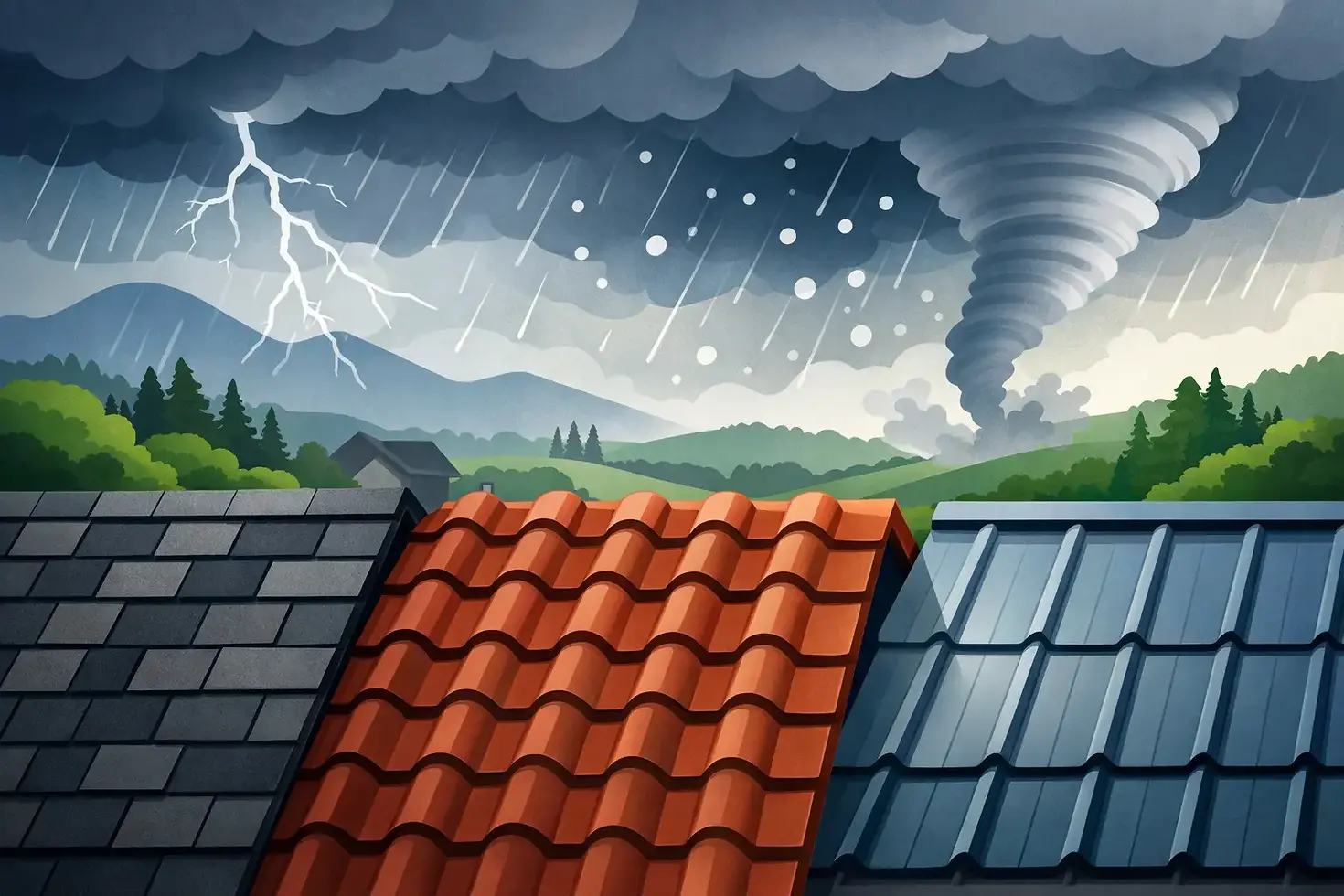
Best Roofing Materials for Storms in Georgia

A roof can look perfectly fine from the driveway and still be one hard storm away from a costly leak. In North Georgia, homeowners deal with wind-driven rain, hail, falling limbs, humid summers, and occasional severe weather that tests every part of a roofing system. Choosing the best roofing materials for storms means looking beyond curb appeal and asking a more practical question: what will protect your home when the weather turns?
The right answer depends on your roof design, budget, neighborhood requirements, and the kind of storm damage your property is most likely to face. Material matters, but so do installation quality, ventilation, flashing, decking condition, and gutters. A high-performing shingle installed poorly can fail before a well-installed, properly rated roofing system.
What Makes a Roof Storm-Resistant?
Storm resistance is not one feature. A roof has to manage several risks at once: wind uplift, hail impact, water intrusion, UV exposure, and debris from nearby trees. In the Atlanta and North Georgia area, wind and rain are often the biggest concerns, though hail can cause damage that is easy to miss without a professional inspection.
Wind ratings tell part of the story. Many architectural shingles are rated for winds up to 130 mph when installed as part of a qualifying system. Metal roofing can perform very well in high winds, particularly when its panels, fasteners, and edge details are designed for the roof structure. However, a rating on a product label is not a guarantee by itself. Proper fastening patterns, sealed edges, starter strips, underlayment, and flashing all affect real-world performance.
Impact resistance is another key factor. A Class 4 impact rating is the highest commonly used rating for roofing materials tested against simulated hail. It can be a valuable feature for homeowners in hail-prone areas, but it does not mean the roof is immune to every hailstorm. It means the material has performed better under standardized impact testing.
Best Roofing Materials for Storms: Your Main Options
Architectural asphalt shingles
For many North Georgia homes, architectural asphalt shingles offer the strongest balance of protection, appearance, availability, and cost. They are thicker and more dimensional than basic three-tab shingles, and quality options are available with enhanced wind ratings, algae resistance, and Class 3 or Class 4 impact ratings.
This material is often the practical choice for homeowners replacing an aging roof or restoring storm damage through an insurance claim. It works with a wide range of home styles, can be repaired more easily than some specialty materials, and generally has a lower upfront cost than metal, slate, or tile.
The trade-off is lifespan. Asphalt shingles typically do not last as long as a properly installed metal roof, especially under repeated sun exposure and severe storms. Lower-grade shingles can also be more vulnerable to wind damage, granule loss, and cracking. If asphalt is your choice, focus on a reputable manufacturer, an appropriate wind rating, and a complete installation system rather than simply selecting the least expensive color or product line.
Impact-resistant asphalt shingles
Impact-resistant shingles are a step up for homeowners who want the familiar appearance of asphalt with stronger hail performance. These shingles are often made with reinforced construction or modified asphalt designed to better absorb impact without splitting.
They can make sense when your neighborhood has experienced hail damage, your insurer offers a potential premium discount, or you plan to stay in the home long term. Ask your insurance carrier directly about any discount requirements before choosing a product. Some carriers require specific documentation or a particular impact classification.
These shingles cost more than standard architectural shingles, and they are not a substitute for storm preparation or inspections. Still, they are among the best roofing materials for storms when hail is a recurring concern and you prefer a traditional shingle roof.
Standing seam metal roofing
Standing seam metal roofing is a strong option for homeowners who prioritize longevity, wind performance, and low maintenance. Its raised seams and concealed fasteners help reduce the number of exposed penetration points on the roof surface. When designed and installed correctly, metal roofing can withstand high winds and shed rain efficiently.
Metal also resists rot, does not absorb water, and can perform well against flying debris. It is especially appealing for homes with simple rooflines, cabins, farm-style homes, and homeowners planning a long-term investment.
There are practical considerations. The initial cost is higher than asphalt, and installation requires experienced crews who understand panel expansion, flashing details, valleys, and roof transitions. Metal roofs can also dent from large hail or falling branches, even if the roof remains watertight. A dent is not always a functional failure, but it can still matter if appearance is a priority or an insurance claim is involved.
Stone-coated steel roofing
Stone-coated steel combines the strength of metal with a more traditional shingle, shake, or tile appearance. It can offer excellent wind and impact performance while giving homeowners more design flexibility than standing seam panels.
This is often a good fit for homeowners who want a premium, storm-conscious roof without the distinct look of exposed metal panels. It is lightweight compared with concrete tile and generally more durable than conventional asphalt shingles.
Its main drawback is cost. Repairs may also be more specialized, and product availability can vary. For the right home, though, it provides a durable middle ground between standard shingles and higher-end roofing systems.
Slate and tile
Slate and tile are long-lasting materials with strong fire resistance and a distinctive appearance. They can be excellent products in the right application, but they are not automatically the best choice for every storm-prone Georgia home.
Natural slate and concrete or clay tile are heavy. Your home's framing must be able to support the load, and installation requires specialized expertise. Individual pieces can also crack from severe hail or falling limbs. Synthetic slate and composite tile may offer a lighter, more impact-resistant alternative, but quality varies by manufacturer.
For homeowners who love the appearance of slate or tile, a qualified contractor should first evaluate structural needs, slope, drainage, and the availability of trained installers. These roofs are an investment, not a quick storm-damage replacement decision.
The Material Is Only Part of the Protection
A storm-ready roof is built as a system. Water often enters around roof penetrations and transitions, not through the middle of an intact shingle field. That is why flashing around chimneys, walls, skylights, plumbing vents, and valleys deserves close attention.
High-quality synthetic underlayment provides a secondary layer of protection below the outer roofing material. Ice and water protection may also be appropriate in vulnerable areas, depending on roof design and local code requirements. Proper attic ventilation helps reduce heat and moisture buildup that can shorten material life from the inside out.
Gutters also matter more than homeowners often realize. Clogged, undersized, or damaged gutters can allow water to back up at the roof edge, overflow near the foundation, or create problems around fascia and soffits. After a storm, roof and gutter inspections should go together.
How to Choose for Your Home and Budget
Start by considering the condition of your current roof. If a storm has already caused lifting shingles, exposed nails, missing granules, dented vents, or interior staining, document what you see but avoid climbing onto the roof. Small damage can create a path for a larger leak during the next rain.
Next, consider how long you plan to own the home. A homeowner preparing to sell may reasonably choose quality architectural shingles that match the neighborhood. A homeowner planning to stay for decades may find that a metal roof or impact-resistant system better supports long-term goals.
Also think about your immediate surroundings. Homes beneath mature trees may need stronger protection from limbs and more regular roof cleaning. Open properties may experience more direct wind exposure. Complex rooflines with multiple valleys, dormers, and wall connections need especially careful installation, whatever material you choose.
If storm damage may be covered by insurance, do not let the material selection get ahead of the inspection and claim process. Your policy, deductible, local building codes, and documented damage can affect what is covered. A dependable contractor can help identify storm-related damage, explain the scope of repairs, and communicate clearly with your adjuster without making promises about claim outcomes.
A Local Roof Decision Deserves a Local Inspection
There is no single roofing material that wins every category. Architectural shingles remain a dependable choice for many homes. Impact-resistant shingles add useful hail protection. Metal can offer excellent longevity and wind performance for homeowners prepared for a higher upfront investment. The best choice is the one that fits your home, your exposure to storms, and a properly installed roofing system.
When severe weather leaves you uncertain about your roof, a prompt, honest inspection can protect both your home and your options. Cumming Roofing Co helps North Georgia homeowners assess damage, understand repair or replacement choices, and move forward with clear guidance when the weather has put their home to the test.


Comments